Toplu Taşıma / Kentsel Planlamayla Alakalı Makale, Haber vb. Paylaşımı

Marmaray

WT Kullanıcı
Mesajlar
276
Puanlar
426
Son düzenleme:
https://humantransit.org/2025/12/many-americans-are-open-to-car-free-living.html

evet amerikayla alakalı fakat Yorumlarda Chris adlı arkadaşın bence sınırları aşan şu yazdıklarına dikkatinizi celbetmek isterim:

“Public transit’s costs and benefits are both primarily local (as opposed to something like intercity rail or airports, which exist interaction with faraway places beyond the normal workday commute/labor shed), so services should reflect local needs. Most of the costs of transit are operations: the stuff you cannot avoid and must pay in order to keep what you have (labor, maintenance, fuel, dispatching, service yards, call centers, communications). This is the big hurdle, because transit cannot make money because in order for it to be useful, a lot of unproductive service must be run (peak > weekday midday > weekend daylight > weeknight > weekend night > overnight) as well as coverage services that support ridership services.
Getting a stable subsidy source is important to make a service useful, which means different things to different people. For people who don’t work 9-to-5, it means having bus service available predawn or past sundown. For people living on other people’s schedules (work, school, appointments), it means service frequent enough to show up and go and arrive at both ends in a reasonable amount of time. A frequency of 15 minutes is the point where people will make spontaneous trips and command the schedule to memory, and generally results in the least time wasted in terms of endpoint connections, and still reasonable to make with timed transfers.”

DeepL’den çeviri:
Toplu taşıma maliyetleri ve faydaları öncelikle yerel niteliktedir (normal iş günü işe gidip gelme/iş gücü havzası dışındaki uzak yerlerle etkileşim içinde olan şehirlerarası demiryolları veya havaalanları gibi ulaşım araçlarının aksine), bu nedenle hizmetler yerel ihtiyaçları yansıtmalıdır. Toplu taşıma maliyetlerinin çoğu işletme maliyetleridir: sahip olduklarınızı korumak için kaçınamayacağınız ve ödemek zorunda olduğunuz şeyler (işçilik, bakım, yakıt, sevkiyat, servis sahaları, çağrı merkezleri, iletişim). Bu büyük bir engeldir, çünkü toplu taşıma, yararlı olabilmesi için birçok verimsiz hizmetin (yoğun saatler > hafta içi öğlen > hafta sonu gündüz > hafta içi gece > hafta sonu gece > gece) yanı sıra yolcu hizmetlerini destekleyen kapsama hizmetlerinin de yürütülmesi gerektiğinden para kazanamaz.”

“Hizmetin kullanışlı olması için istikrarlı bir sübvansiyon kaynağına sahip olmak önemlidir, ancak bu farklı kişiler için farklı anlamlar ifade eder. 9-5 mesaisi olmayan kişiler için bu, şafak sökmeden önce veya gün batımından sonra otobüs hizmetinin mevcut olması anlamına gelir. Başkalarının programlarına (iş, okul, randevular) göre yaşayan insanlar için ise, makul bir sürede varış noktasına ulaşmak için yeterince sık hizmet sunulması anlamına gelir. 15 dakikalık sıklık, insanların spontane seyahatler yapıp programı ezberleyecekleri noktadır ve genellikle varış noktası bağlantıları açısından en az zaman kaybına neden olur ve zamanlı aktarmalarla hala makul bir seçenektir.”
 
https://humantransit.org/2025/12/many-americans-are-open-to-car-free-living.html

evet amerikayla alakalı fakat Yorumlarda Chris adlı arkadaşın bence sınırları aşan şu yazdıklarına dikkatinizi celbetmek isterim:

“Public transit’s costs and benefits are both primarily local (as opposed to something like intercity rail or airports, which exist interaction with faraway places beyond the normal workday commute/labor shed), so services should reflect local needs. Most of the costs of transit are operations: the stuff you cannot avoid and must pay in order to keep what you have (labor, maintenance, fuel, dispatching, service yards, call centers, communications). This is the big hurdle, because transit cannot make money because in order for it to be useful, a lot of unproductive service must be run (peak > weekday midday > weekend daylight > weeknight > weekend night > overnight) as well as coverage services that support ridership services.
Getting a stable subsidy source is important to make a service useful, which means different things to different people. For people who don’t work 9-to-5, it means having bus service available predawn or past sundown. For people living on other people’s schedules (work, school, appointments), it means service frequent enough to show up and go and arrive at both ends in a reasonable amount of time. A frequency of 15 minutes is the point where people will make spontaneous trips and command the schedule to memory, and generally results in the least time wasted in terms of endpoint connections, and still reasonable to make with timed transfers.”

DeepL’den çeviri:
Toplu taşıma maliyetleri ve faydaları öncelikle yerel niteliktedir (normal iş günü işe gidip gelme/iş gücü havzası dışındaki uzak yerlerle etkileşim içinde olan şehirlerarası demiryolları veya havaalanları gibi ulaşım araçlarının aksine), bu nedenle hizmetler yerel ihtiyaçları yansıtmalıdır. Toplu taşıma maliyetlerinin çoğu işletme maliyetleridir: sahip olduklarınızı korumak için kaçınamayacağınız ve ödemek zorunda olduğunuz şeyler (işçilik, bakım, yakıt, sevkiyat, servis sahaları, çağrı merkezleri, iletişim). Bu büyük bir engeldir, çünkü toplu taşıma, yararlı olabilmesi için birçok verimsiz hizmetin (yoğun saatler > hafta içi öğlen > hafta sonu gündüz > hafta içi gece > hafta sonu gece > gece) yanı sıra yolcu hizmetlerini destekleyen kapsama hizmetlerinin de yürütülmesi gerektiğinden para kazanamaz.”

“Hizmetin kullanışlı olması için istikrarlı bir sübvansiyon kaynağına sahip olmak önemlidir, ancak bu farklı kişiler için farklı anlamlar ifade eder. 9-5 mesaisi olmayan kişiler için bu, şafak sökmeden önce veya gün batımından sonra otobüs hizmetinin mevcut olması anlamına gelir. Başkalarının programlarına (iş, okul, randevular) göre yaşayan insanlar için ise, makul bir sürede varış noktasına ulaşmak için yeterince sık hizmet sunulması anlamına gelir. 15 dakikalık sıklık, insanların spontane seyahatler yapıp programı ezberleyecekleri noktadır ve genellikle varış noktası bağlantıları açısından en az zaman kaybına neden olur ve zamanlı aktarmalarla hala makul bir seçenektir.”
@Emirhan Sevdalı sizin ilginizi çekecek türde. Biir şey olduğunu düşünüyorum
 

Last Mile Service ‘Wien Mobil Hüpfer’ will enter extended regular operation​

by Editorial | UDM
Huepfer-Donaustadt-c-Wiener-Linien-Julia-Allerding-1-24-656x337.jpg

© Wiener Linien / Julia Allerding

After more than two years of successful trial operation, the ‘WienMobil Hüpfer’ (=‘Hopper’) service is entering the next stage of expansion with an improved service offering and is entering extended regular operation.

‘WienMobil Hüpfer’ is an on-demand, electrically powered minibus that transports passengers flexibly within a defined area in Vienna. It complements the existing public transport service and, above all, makes the ‘last mile’ to and from underground, bus or tram stops easier. Passengers can book the wheelchair-accessible electric minibus via an app from numerous stops and be taken to their destination together. Requests with similar routes are automatically bundled by the system.

From 7 January 2026, a total of three vehicles will be available on weekdays, meaning that the on-demand e-bus will be on the road even more often for the people of Vienna. Since its launch in September 2023, the ‘Hüpfer’ has already picked up or dropped off more than 35,000 passengers close to their front doors. In future, there will be even more.

During the trial operation, Wiener Linien and Wiener Lokalbahnen gathered valuable insights and further developed the associated app. With additional resources available, the transition to regular operation will begin in 2026. Mobility behaviour in the 22nd district will be further analysed and the app will also be further adapted. So far, the ‘Hüpfer’ has been very well received by passengers, as evidenced by the feedback: with 9,600 online reviews, the average rating is an impressive 4.9 out of 5 points.

In order to ensure valid comparative data for the test operation to date, the existing operating area of the service will remain unchanged for the time being. At the same time, intensive evaluations are being carried out to determine which new stops could be added in the future to make the network even more comprehensive for customers.

The small e-bus can still be booked via the app. A valid Wiener Linien ticket is required for use.


@Emirhan Sevdalı senin köylere istediğin randevulu toplu taşıma modeli viyana’da bayağı beğenilmiş olacak ki geliştirilmiş.Bu kullanılan araçtan Bostancı-Kadıköy’e de lazım, nuh nebiden kalma Trafic’ler kullanılıyor.

Kaynak: https://www.urban-transport-magazin...hupfer-will-enter-extended-regular-operation/
 
Son düzenleme:

Roadspace allocation between autos, buses, and bicycles with heterogeneous demand (Heterojen talebe sahip otomobiller, otobüsler ve bisikletler arasında yol alanı tahsisi)​

Adlı akademik bir dergide yer almış bir makale. 22 Ocak’ta çıkmış. Güneydoğu Jiaotong Üniversitesi (Çin) Ekonomi ve Yönetim Bölümü ile Sidney Üniversitesi Sivil Mühendislik Bölümü (Avustralya)’deki bazı araştırmacıların ortak çalışmasıymış. Bahsi geçen çalışma ektedir.

Özeti (abstract):
The allocation of road space among different transport modes has long been a key issue in urban planning, yet it lacks solid theoretical foundations. This paper investigates the optimal allocation of road space among three transport modes: private vehicles, buses, and bicycles, for overall system performance. The travel time for each mode is determined based on travel speed derived from fundamental diagrams (FDs). Changes in bus travel time are the least sensitive to excessive demand, as the number of buses is only indirectly affected by demand. A mode choice equilibrium framework based on deterministic user equilibrium is proposed to handle cases with and without heterogeneity in passengers’ waiting time thresholds for buses. Analytical and numerical results reveal that the optimal road space allocation strategy depends on the demand level. Without considering passenger heterogeneity, the optimal strategy is a corner solution - allocating all road space to one of the three transport modes. When heterogeneity is considered, low and medium demand levels result in all space being allocated to private vehicles and bicycles, respectively. For high demand levels, the optimal solution is a non-corner solution, where road space is allocated to both buses and bicycles, and the proportion allocated to buses increases as demand rises. The initial road space share for buses significantly influences system performance. Crucially, this induces either a virtuous or vicious cycle that impacts public transport usage. The threshold for this effect is around 0.4, meaning that allocating approximately half of the road space to buses is critical, and this threshold decreases as demand increases. This study highlights the importance of tailoring road space allocation strategies to demand levels to maximize transport efficiency.
 

Ekli dosyalar

Son düzenleme:
Places Journal’da bir seri gördüm. Sizlerle paylaşmak istiyorum. Kısa açıklamasını paylaşayım ilk:

“Repair Manual​

“Many of the stories and orders of modernity … are in process of coming apart,” wrote the technology scholar Steven J. Jackson a decade ago in his essay “Rethinking Repair.” The shibboleths of “progress and advance, novelty and invention, open frontiers and endless development” are giving way, he warned, to “fragmentation, dissolution, and breakdown.” Today the exigencies of climate crisis are giving new urgency to Jackson’s predictions — and raising new challenges for architecture, landscape architecture, and urbanism.

How might professions premised on carbon-hungry growth and consumption adapt to an overburdened world in which the maintenance of existing structures and landscapes will be more valuable, environmentally and socially, than the creation of new ones? How might the design professions respond to the paradigm shift from building the world to repairing the world?

Yarından itibaren bu seriden bir makale atacağım buraya her gün.
 
Moderatör tarafında düzenlendi:
serideki ilk makale, inşallah uzun olmasına rağmen okur ve beğenirsiniz:
Drawing the Line

Becoming expert in repair, finding creativity in the historical and material weight of existing conditions: for architects in the Anthropocene, this is a growth opportunity. Or better, a de-growth opportunity.

DANIEL A. BARBER

JANUARY 2024


Barber-Repair-10-1536x1021.gif

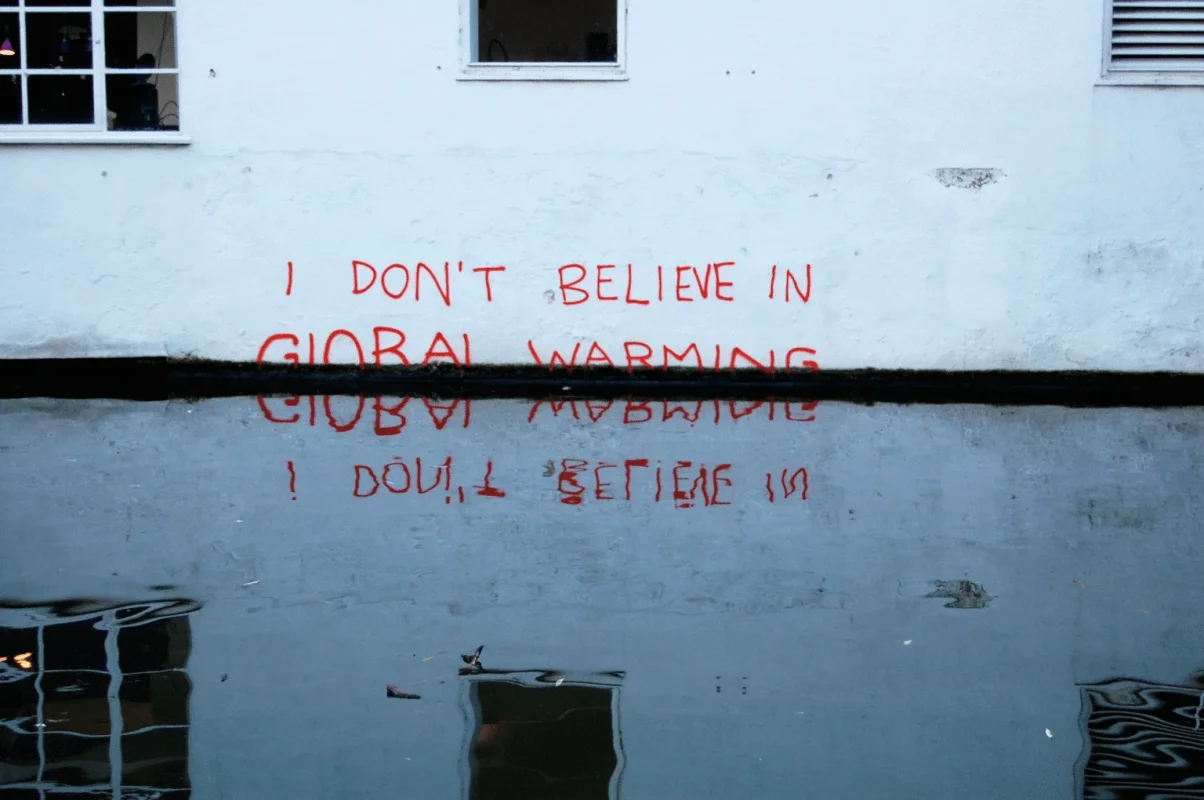
Graffiti, London, attributed to Banksy. [Magnus D via Flickrunder License CC 2.0]

It is hard to know what to think, or even how to think, about architecture, and its future, in the Anthropocene.

Like much else — everything else? — in the modern era, architecture has been shaped by fossil fuels, by the materials, forms, and environments made possible by the extraction and combustion of coal, oil, and gas. Many iconic buildings of the 20th century deployed copious quantities of concrete, steel, and glass, and found expressive ways to conceal their energy-intensive mechanical systems. Indeed, it would be difficult to come up with a more carbon-hungry type of construction. Yet now we know with ever-increasingly clarity that these formally compelling structures, with their carefully conditioned interiors, are contributing to the climate crisis that is suddenly, it seems, impossible to ignore. The science is clear, the changes are happening now, the transition is upon us.

Architects know all this; we know there are more responsible ways to design, and to build, and there is fervent collective aspiration to do better. Still, the field struggles to achieve even half-measures. The profession is reluctant to disrupt practices that have long driven and defined the design disciplines, practices that reward creation not maintenance, novelty not repair. Reluctant to cross the line that would mark a decisive shift from our carbon-profligate past to a future in which the environments we design have a wholly different metabolism, a different relationship to energy and the countless ways in which it shapes, even controls, our society and our politics. 1

Barber-Repair-21-1536x944.gif

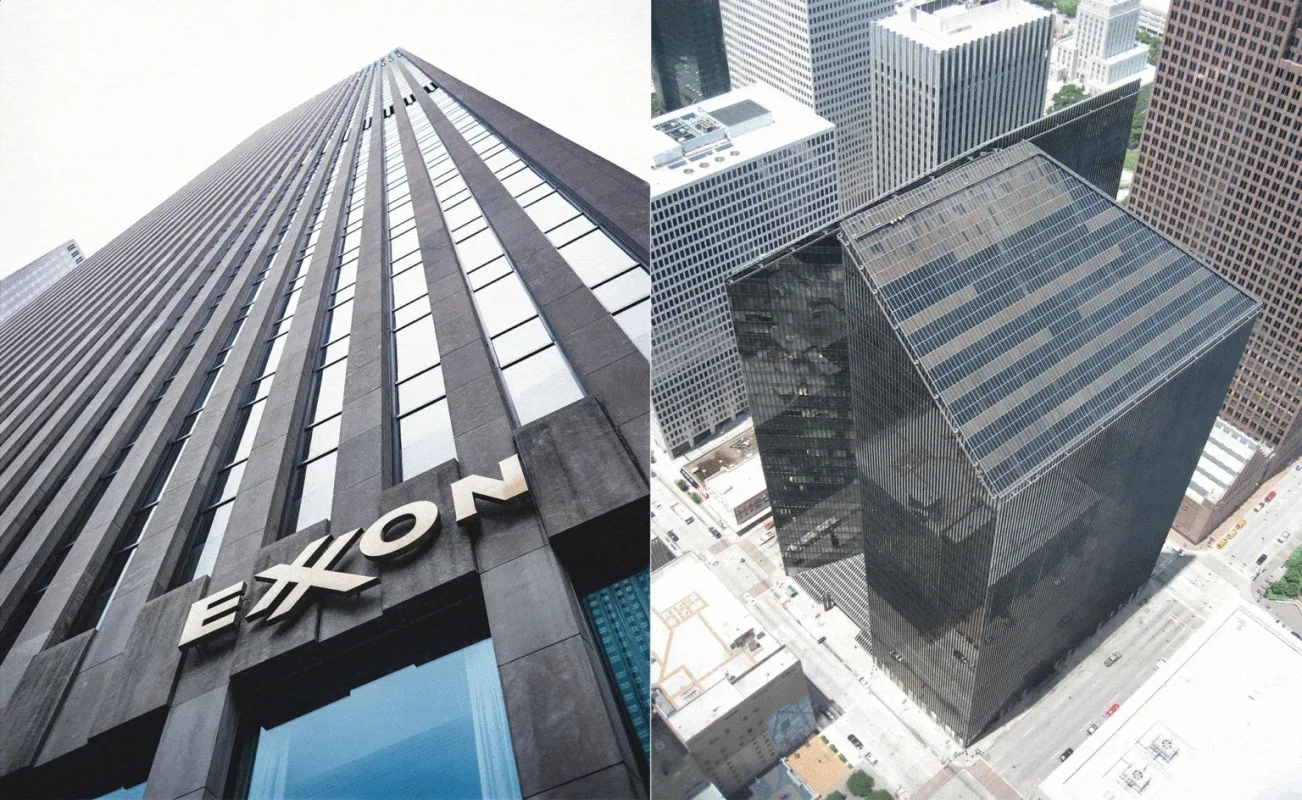
Among the carbon-hungry modernist buildings of the 20th century are, left. the former headquarters of Exxon, in Manhattan, designed by Harrison & Abramovitz in the late 1960s as an expansion of Rockefeller Center, and right, Pennzoil Place, in downtown Houston, designed by Johnson/Burgee Architects in 1976 as the headquarters of Pennzoil. [Left: Alamy / Right: Anders Lagerås via Wikimediaunder License CC 3.0]

Architecture is reluctant to disrupt practices that have long defined the field, practices that reward creation, not repair. Can we build otherwise? Should we build at all?

Instead we seem stuck; stuck in a culture that won’t draw the line — yet remains all too eager to build The Line. This is the infamous new city being planned by Saudi Arabia that will consist of two mirrored megastructures extending from the Red Sea across more than 100 miles of mountains and desert. Predictably, the project is being promoted as “smart,” “green,” “a model for sustainable living” — no matter that its sheer scale defies all possible carbon-reduction calculations. Nor is The Line that much of an outlier. Other similarly audacious visions include a proposed American city called Telosa, conceived by a former Walmart executive as a settlement “designed from a clean slate” somewhere in the desert and run on “100% renewable energy”; a wholly new “walkable” city to be developed on farmland in the Solano Valley by a group of investors who want to “bring back the California dream”; a new floating city in the Maldives described by its government sponsors as a prototype for “sustainaquality”; and immense new capital cities in Egypt and Indonesia.

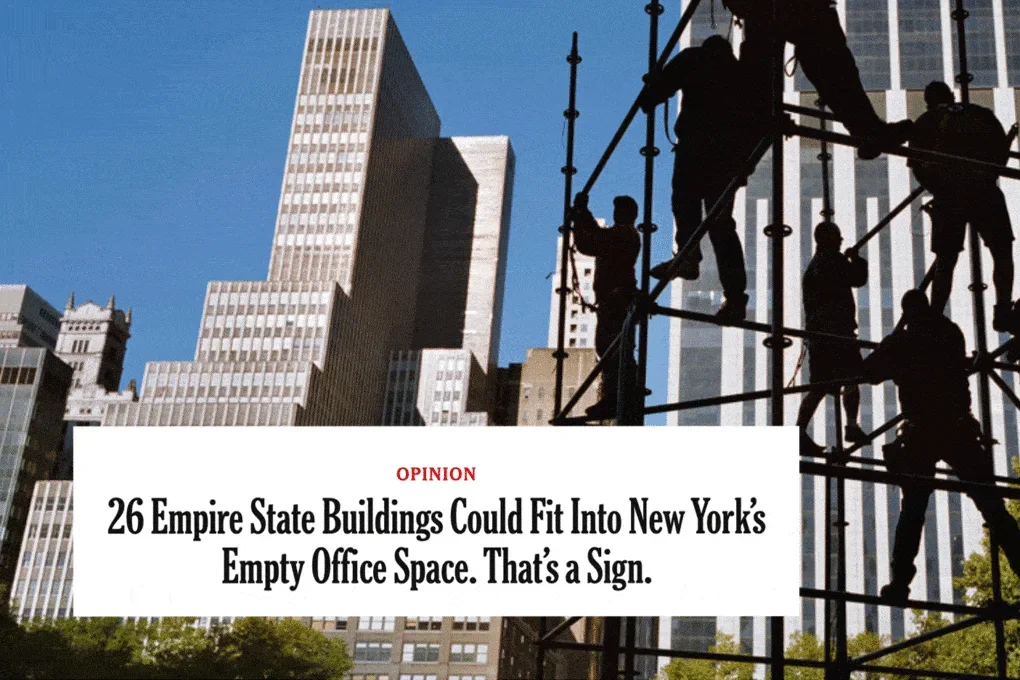
The cultural logic of these projects is all too familiar; it is the seductive appeal of world-making, of the tabula rasa, of “starting from scratch” rather than, say, painstakingly repairing and reinvesting in the existing cities of Cairo and Jakarta; or, for that matter, Phoenix, San Francisco, New Orleans, or Detroit. 3 A similar logic, albeit at a smaller, more manageable scale, can be seen in the New York Climate Exchange, the $700-million cluster of new and renovated structures on Governors Island in New York harbor that will comprise “a state-of-the-art, 400,000-square-foot campus … dedicated to researching and creating innovative climate solutions.” The Climate Exchange was reported on by the New York Times in April of last year; around the same time, the paper also decried Manhattan’s climbing office vacancy rate, in a news story with this spectacular headline: “26 Empire State Buildings Could Fit Into New York’s Empty Office Space.”

Barber-Repair-9-1020x680.gif

From the New York Times, May 2023.

Would it not be a more “innovative solution” to house the “climate campus” in the vacant towers of Manhattan? Such an approach would at least begin to recognize that we have crossed the line; that “innovative” architecture and planning must now rely less on formal or material invention and more, and more decisively, on the pursuit of decarbonization.


Bayağı uzun ve bir sürü fotoğraf içeren bir makale olduğundan ötürü burada keseceğim.
Devamını paylaşırın
 
Moderatör tarafında düzenlendi:
Geophysical lines are being crossed, and crossed, again and again. A couple of decades ago we crossed the line that set up a future of climate instability, ecological degradation, accelerating environmental inequity. The recognition that this future has become our present does not hinge on any single event. It’s not a clean line at all; if you drew it, it would be squiggly, amorphous, maybe porous or dashed. It’s an aggregation of inexorable effects, what had once been considered “intolerable, quasi-unthinkable,” a portent of “coming barbarism,” in the words of philosopher Isabelle Stengers; or what a character in one of William Gibson’s cli-fi parables describes as “androgenic, systemic, multiplex, seriously bad shit.”

Clockwise from top left: Statue of Liberty shrouded in smoke from Canadian wildfires. A journey for water in Shyamnagar Union, Satkhira, Bangladesh, May 2023. Wildfire in British Columbia, Canada, July 2023. Flooding in SIndh Province, Pakistan, August 2023.

Clockwise from top left: Statue of Liberty shrouded in smoke from Canadian wildfires, June 2023. [Anthony Quintano via Flickr under License CC 20] A journey for water in drought-stricken Shyamnagar Union, Bangladesh, May 2023. [World Meteorological Organization, Muhammad Amdad Hossain via Flickr under License CC 2.0] Wildfire in British Columbia, Canada, July 2023. [Derek Visser via Flickr under License CC 2.0] Flooding in Sindh Province, Pakistan, August 2023. [World Meteorological Organization, Hideo Tanikawa via Flickr under License CC 2.0]

The climate crisis did not so much begin as all at once appear, and lately it is appearing everywhere. The week I started this essay, the news was filled with reports about the tropical storm in southern California. As I continued to write, the news kept coming: monsoons in Korea, Pakistan, India; wildfires in Canada and Hawaii; flooding in New England, in New York, in Libya, in Greece; brutal heat from Phoenix to Rome to Algiers to Beijing to Tokyo. The temperature of the Atlantic Ocean around the Florida Keys rose to more than 100° Fahrenheit. Heavy weather crashed the bacchanal at Burning Man, transforming the Black Rock desert into a rain-sodden plain. The sea ice around Antarctica has shrunk to what one scientist called “mind-blowing” new lows. And we know now that 2023 was the hottest year ever, and 2024 is predicted to be hotter yet.

Every day brings new evidence of new climate realities, of seriously bad shit.
Every day brings new evidence of new climate realities, of seriously bad shit. The planet is crossing lines — passing tipping points, “well outside of the safe operating space for humanity,” in the words of a recent scientific paper. But awareness hasn’t yet translated into widespread action or changes in behavior, into sociopolitical desires or cultural ambitions, into the collective consciousness of new constraints. The line will become truly real when we focus on it, when we see it as a limit, and also an opportunity; when we take on the challenge of integrating new limits into our daily lives and professional practices. The crisis is waiting, impatiently, for us to pay attention. To draw the line, the line that separates before and after. That was then, this is now; and now we act differently. We design and build differently. We imagine different futures.


Architects draw lines for a living; lines with different ambitions and impacts — different weights, if you will. From concept drawing to computer model to construction document, the drawing of lines is central to the profession, to its cultural agency and disciplinary identity. Eventually these drawn lines become manifest in the world, in the form of buildings, spaces, objects; and more, in the form of urban systems and social environments. In drawing lines, architects project and produce future worlds.

Today we are compelled to recognize that the historical importance of architecture lies not just in its cultural dynamism but also in the energy systems it has depended on, deployed, and facilitated. To put it plainly: in the modern era, buildings have been a primary means through which fossil fuels, once extracted from the earth, have been processed and made social, and then entered the atmosphere in the form of carbon emissions. Buildings regulate throughput; metabolize forces. Buildings are in essence processors of energy, from construction to occupation to demolition to decay. One imagines that a history of 20th-century architecture, perhaps written in 2050, will emphasize this carbon-processing capacity as much as (or more than) the debates over modernity and postmodernity, or the indulgent thrills of parametricism. The buildings that exist, the buildings we are designing now: all perpetuate the fossil fuel economy. Architecture can be understood as the cultural frame — an apologist, even — for this processing of fuel.

Can we build otherwise? Should we build at all?


Of course, it’s not just architecture, or the building industry. Most economic sectors — think transportation, agriculture, fashion — are struggling to operate otherwise, to move past business as usual — the term used in the climate community to decry the heedless or selfish adherence to the capitalist ethos of continuous growth, the modernist faith in unending sociotechnical progress.

The Intergovernmental Panel on Climate Change was established in the late 1980s — not long after scientist James Hansen gave his famous testimony to Congress in which he warned that global warming was already happening — and since then there have been endless meetings, treaties, and protocols, policies and laws, research reports and assessments. The Earth Summit in Rio de Janeiro, the Kyoto Protocol, the Paris Agreement, the annual gatherings of the Conference of the Parties, or COP, the latest of which, hosted by the oil-producing powerhouse of the United Arab Emirates, concluded with a tepid agreement to “transition away” from fossil fuels rather than a more robust commitment to phase them out.Change has been piecemeal, inadequate; mostly marginal improvements in efficiency, embedded in tenacious models of carbon-dependent development. The trend lines have not been crossed.

Graphs sharing socio-economic trends and earth system trends, adapted from the 2015 article The Trajectory of the Anthropocene: The Great Acceleration, published in The Anthropocene Review.

Graphs showing “socio-economic trends” and “earth system trends,” adapted from the 2015 article “The Trajectory of the Anthropocene: The Great Acceleration.” [Courtesy Welcome to the Anthropocene]
 
Most sectors struggle to move past business as usual — past the capitalist ethos of growth, the modernist faith in unending sociotechnical progress.
“The Anthropocene is many things. But above all else, it is a line,” writes Reinhold Martin. “Though it did not appear graphically at first, it is fundamentally — if deceptively — a concept that traces a path from one point to another.” The concept of the Anthropocene as a new geological epoch was proposed in 2000 by chemist Paul Crutzen and biologist Eugene Stoermer as a way “to emphasize the central role of mankind in geology and ecology.” A few years later climate scientist Will Steffen and colleagues traced “the trajectory of the Anthropocene” in a path-breaking article that was, in part, a collection of lines. One set of lines tracked “earth system trends” (carbon dioxide, methane, ocean acidification, domesticated land, forest loss, etc.); a parallel set tracked “socioeconomic trends” (urban population, energy use, tourism, transportation, fertilizer consumption, etc.). These sets of lines are entangled, conjoined; not so much interrelated as, in essence, the same line, drawn across different contexts, isolated in different graphs but all climbing upwards, and all contributing to the line of the “Great Acceleration,” which shows, in the scientists’ words, “the dramatic change in magnitude and rate of the human imprint from about 1950 onwards.”

Still, some lines are drawn more optimistically; or perhaps disingenuously. The author-provocateurs of “The Ecomodernist Manifesto” envision a very different trajectory in which the rising lines of economic growth are “decoupled” from the rising lines of ecological devastation. The result, in their cheerful assessment, will be “a good, or even great Anthropocene” — an era of continuing human consumption, of innovation underwritten by “a new generation of nuclear technologies.”

From the Sixth Assessment Research Report, published by the IPCC in 2023; this diagram appears on page 31 of the report.

From the Sixth Assessment Research Report, published by the IPCC in 2023; this diagram appears on page 31 of the report.

All the while the IPCC has been drawing its own lines — lines which are, above all, contingent, searing in their multiplicity, in their numerous possible trajectories. These lines point to a future that might be possible if only — if only “multiple interacting choices and actions can shift development pathways towards sustainability”; if only government, industry, and culture can align, and act urgently, effectively. These lines are thick with possibility, inflected with hope, but often overwhelmed by other lines that point to another future, to “maladaptation … increasing climate risks … ecosystem degradation.”

These lines are paths we are traveling together, for better or worse, towards survival or doom. How bad, they ask, will we let things get?


All these lines are perhaps the issue. The architectural discipline is still, on the whole, a bit drowsy, still awakening, rousing itself from the long 20th-century dream of progress and modernity, the dream of a clear path ahead. A dream that has been a nightmare for so many; the arrow of progress is a problematic line, riddled with inequity. We are still configured by capital, overwhelmed by regulation, eager to embrace the latest technologies and solutions.

Le SIgnal, in Soulac-sur-Mer, on the Atlantic coast of France, whose 75 inhabitants are the victims of the first French climate expropriation, photographed in January 2023, prior to its demolition later that year.

Le Signal, in Soulac-sur-Mer, on the Atlantic coast of France, whose 75 inhabitants are the victims of the first French climate expropriation, due to erosion of the fragile shoreline; photographed in January 2023, just before its demolition. [Duffour/Andia, Alamy]

As the historian Dipesh Chakrabarty famously, though circumspectly, put it, “The mansion of modern freedom stands on an ever-expanding base of fossil fuel use.” This mansion — this architecture — was designed by and constructed for elites, reliant on exploited labor and extractive economies; yet the fossil fuel system, what author-ecologist Andreas Malm calls a “socio-ecological structure,” also brought freedom, or at least relative prosperity, to some. The modern world, the world of the Anthropocene, was made on the premise, the promise, of never-ending growth, a line of expansion ever upward. It is a forced line, all the same: every barrel of oil, every automobile, every mile of pavement, every carefully conditioned house promoting possibilities for some, constricting opportunities for others. And when we consider the future, and people in the future, our own selves and our descendants, we can see that the mansion is shabby, poorly constructed, value-engineered, patched up and rotting as floods and fires encroach. A mansion, a refuge, a prison. In Fossil Capital, Malm disavows this linear thinking:

[T]he fossil economy is an altogether historical substance. It must have undergone its own birth once upon a time. The causal powers it now exerts are emergent properties: they were not always there. Agents must have created it through events amounting to a moment of construction, much as, once erected, a building’s structure is now an enduring feature of the world; entrenched in the environment, it conditions the movements of the people inside. Eventually it appears indistinguishable from life itself: business-as-usual. But the fossil economy was once constructed and has since been reproduced and enlarged, and anything built over time can potentially be torn down (or escaped).
Architects today are exploring options: reuse, retrofit, renovation. Becoming expert in repair, working with existing structures to take advantage of their embodied carbon, to find creativity within new constraints, in the heavy historical and material weight of existing conditions: for architects this is a growth opportunity. Or better, a de-growth opportunity. A repositioning of designers as agents of decarbonization. And here the lines become circular; they point us to the past, productively, to the richness of seemingly forgotten knowledge of how to build, how to live, before fossil fuels; they clarify the historical awareness that architectural modernism was based, in no small part, on the delegitimizing of traditional, vernacular, and customary practices of designing and building — on “making it new.” (Laughter from the flood-soaked audience).

Architectural modernism was based, in no small part, on delegitimizing traditional practices of designing and building — on ‘making it new.’
Much of the problem in architecture, and elsewhere, is that this line, the line that would separate the oil-soaked past from the decarbonized future, has been hidden, suppressed — sent to the background layer of the file. How can we cross the line, if we can’t see it? A serious question: how is it that architects, a well-educated group of mostly well-intentioned people, continue to provide carbon-laden professional services despite the science that makes it indisputably clear that the materials and systems they are specifying are leading, and will continue to lead, to the instability of the climate, the destruction of cities and habitats, and the death of millions, if not the entire species? A provisional answer: the economic and cultural apparatus of building design has obfuscated the intensity of the effects of these practices. Architects (along with so many others) have been attempting to make the situation manageable, reasonable, transition-able, rather than face existential terror.
 
From the Intergovernmental Panel on Climate Change Library, a (very partial) view of the many reports the organization has produced.

From the website of the Intergovernmental Panel on Climate Change Library, a (partial) view of the many reports the organization has produced.

There is a convenient alibi: architects must rely on regulatory change, on political will, on the desires of clients; and in any case the scientific and policy communities have themselves made too little progress. We have all been hoping that marginal adjustments to systems (electric cars, wind turbines) would allow life to go on “as normal” — yet every IPCC report laments that the last report didn’t fully anticipate how disruptive the anthropogenic forcing has been. Architects have been playing a similar game. We’ve become expert at integrating new technologies into our projects; we’ve adapted to the new parameters, the new challenges of solar panels, passivhauses, vertical forests. But it’s all alarmingly naïve: this is not an indictment, just historical fact. The political and environmental context for building has changed, dramatically and inexorably, in ways unimaginable even a few years ago; yet the socioeconomic and cultural characteristics of the field — of a profession comprised mostly of private commercial firms — make it difficult to keep up.

For architects, the most seductive and pervasive permission structure is what we have agreed to call ‘sustainability.’
One’s ability to see the line, and to take corresponding action, is, in other words, clouded by a counter-accumulation to carbon in the atmosphere: a piling on of socioeconomic rationales for maintaining business as usual, of permission structures that allow professional and social life to continue in a recognizable manner. For architects, the most seductive and pervasive permission structure is what we have, over the past several decades, agreed to call “sustainability.” The frameworks of sustainability (along with its close counterpart, resilience) have significantly expanded and diversified the range of technological possibilities for design and energy management, and we can see their impacts in architectural forms and structures, in better indoor air quality, in greener materials.

Composite of logos of LEED, Net Zero 2050, and Living Building Challenge, with a photo of a smokestack.

Top left: Global warning. [Martin Snicer via Flickr under License CC 2.0]

Laws and policies have been enacted (usually with stark regional limitations, cumbersome requirements and reviews, and vague implementation; but still). We have LEED certifications. Living Buildings. 2030 goals. Inflation Reduction Acts. Net Zero 2050 (more on this below). Yet carbon emissions from buildings are still increasing — the line shoots ever upward. Some recent buildings emit less greenhouse gas than they might have otherwise, but the global carbon footprint of the industry continues to expand. The infrastructures of carbon dependence are so embedded in architectural processes, and in the workings of the construction sector, that they can seem impossible to extract; just as the rhetoric and metrics of sustainability so dominate our discourse that it is exhausting to detail their inadequacy.

The IPCC has its own rhetoric, its own terminology to account for the impacts of architectural construction. It has coined the term “lock-in buildings” to describe the continuing and accumulating effects of energy use over decades. “The ‘lock-in’ effects of infrastructure, technology and product design choices made by industrialized countries in the post-World War II period of low energy prices are responsible for the major recent increase in world GHG emissions,” wrote the authors of an IPCC study a decade and a half ago. To put it more bluntly: buildings that rely on carbon for their operational energy (embodied energy notwithstanding) are locking in a future of intensified climate instability. <a href="https://placesjournal.org/article/d...ure-in-the-anthropocene/?cn-reloaded=1#ref_17" title="Read Footnote 17">17</a> They are enabling the flow of fossil fuel, keeping the carbon economy alive — no matter that there’s a bike shower in the basement. Again: how to build otherwise? How to move past not only the most egregious lock-in buildings but also the exemplary yet ineffectual models of sustainability?

How to draw the line that separates the profligate past from the renewable future? Not the end of the world — the start of a new one.


Net-zero carbon is an accounting maneuver that allows for emissions in the present on the promise of innovation in the future. It is solutionism in extremis.
Two persistent mythologies — permission structures — are holding the profession back. The first myth is “net-zero carbon.” This is the wishful and elusive concept that increasingly shapes climate discourse, in architecture and elsewhere. It is an elegant if obvious fiction; and the first thing to emphasize is that net-zero carbon does notrefer to an absolute reduction in greenhouse gas emissions. Rather, it is an accounting maneuver that allows for emissions to continue in the present on the promise of technological innovation in the future. Net zero refers to the temporal point on a plotted line — somewhere in the future, often mid-century — when greenhouse gas emissions will be counterbalanced by presumably successful new technologies — chiefly, carbon capture and storage, and carbon dioxide removal — that will absorb and draw back carbon from the atmosphere. These new technologies are, it must be emphasized, untested. “Engineering-based removal activities are technologically and economically unproven, especially at scale,” wrote the authors of a U.N. study, “and pose unknown environmental and social risks.” Furthermore, as a news story in Forbes put it, they are “still a cottage industry.”
 
Net zero is, in other words, solutionism in extremis; “a dangerous trap,” in the sharp assessment of climate scientists James Dyke, Robert Watson, and Wolfgang Knorr. “This is a great idea, in principle,” they write. “Unfortunately, in practice it helps perpetuate a belief in technological salvation and diminishes the sense of urgency surrounding the need to curb emissions now … net zero has licensed a recklessly cavalier ‘burn now, pay later’ approach.” <a href="https://placesjournal.org/article/d...ure-in-the-anthropocene/?cn-reloaded=1#ref_19" title="Read Footnote 19">19</a>Net zero is not only helping to perpetuate business as usual; that is, seemingly, its primary goal.

One direct consequence of net zero is “the overshoot” — a buzzy, fuzzy term that’s been circulating for several years, ever since the 2015 Paris Agreement adopted the goal of limiting global warming to 1.5° Celsius. The overshoot is the line that best describes our planetary future, the one we have collectively drawn, albeit often unwittingly, or unwillingly. The overshoot is the period of time during which economies will proceed more or less as normal and carbon will accumulate in the atmosphere; all the while the impacts of climate instability — migrations, famine, fire, floods — will be everywhere experienced.

The overshoot chart, showing how present actions and decision will affect health and happiness in the near and long term, and showing also the intense contingencies we are all, willingly or not, negotiating all the time. Produced by the IPCC in mid-2023 and published in its Sixth Assessment Report, which warns: “Projected global GHG emissions from Nationally Determined Contributions, or NDCs, announced prior to COP26 would make it likely that warming will exceed 1.5° Celsius and also make it harder after 2030 to limit warming to below 2° Celsius.”

The overshoot chart, showing how present actions and decisions will affect health and happiness in the near and long term, and revealing the intense contingencies we are all negotiating willingly or not. Produced by the IPCC in mid-2023 and published in its Sixth Assessment Report, which warns: “Projected global GHG emissions from Nationally Determined Contributions, or NDCs, announced prior to COP26 would make it likely that warming will exceed 1.5° Celsius and also make it harder after 2030 to limit warming to below 2° Celsius.”

The overshoot is, in fact, the plan, the policy that many in government and industry are pursuing. The plan, for the next several decades at least, is to allow global warming to exceed 1.5° Celsius in order not to disrupt business as usual; and then, sometime in the near-ish future, the worst effects of this excess will somehow be mitigated through deployment of anticipated technological breakthroughs. Together, net zero and the overshoot constitute a permission structure extraordinaire, an almost mystical faith that the “problem” is “solvable” and that our current lives and lifestyles — including our carbon-heavy design and construction — can carry on, undisturbed. No need to change direction. Climate change can even become a new growth industry, as carbon capture technologies capture government subsidies and venture capital. The cranes that punctuate the skyline of so many cities are a testament to the effectiveness of this modern mythos.

It really is that absurd; that awful. Net zero really is the leading benchmark — make that “benchmark” — for carbon emissions management at scale. It’s the status quo model for global mitigation; the concept that undergirds the models and reports of the IPCC, that informs the mitigation plans of the European Union, that underlies numerous national and regional frameworks, not to mention building regulations and sustainability targets. The Biden administration just announced a huge push in funding for carbon capture and storage technologies, over the objections of critics focused on the amount of carbon that will be expended in the proposed research and experimental efforts.Net zero has become “best practice” in the building industry. We are collectively proceeding, according to the forecasts of quasi-statist organizations like the International Energy Agency and in the scientific materials that inform codes and regulations, on the proposition that in order to maintain economic growth and social stability we must continue to exceed planetary boundaries, and cross our fingers.


In an article in Science, climate researchers Kevin Anderson and Glen Peters describe the reliance on “negative-emission technologies” as “a moral hazard par excellence.” For architects there is a corollary moral hazard — the parcellated version of net-zero carbon that is the “net-zero building.” The concept is deceptively simple; in the usual definition, a net-zero building will be able to meet all its operational needs with energy generated onsite from renewable sources. But ultimately the concept is too simple; it tends to ignore the key distinction between energy used in a building’s operations, on the one hand, and carbon emitted by the building, on the other. These are not at all the same, and to propose that any building could function without emitting carbon into the atmosphere requires a spreadsheet so steeped in speculative and questionable arrangements — e.g., carbon offsets, planted trees, electric charging points, anticipated efficiencies — that the resulting calculations are a form of fiction. As a report in Building Green puts it, net-zero building standards “are not credible, not scalable, and don’t eliminate emissions.”
 
To propose that any building could function without emitting carbon requires a spreadsheet so steeped in speculation that the resulting calculations are a form of fiction.
The second myth that is holding us back is the principle of efficiency. This is the principle at the heart of sustainable architecture; that suggests architects can provide the same services and design the same recognizable buildings, but with marginally reduced emissions. In 2022 the IPCC released its Mitigation of Climate Change report, which clarified, gloomily, that gains in efficiency in recent decades have been offset — “approximately matched” in the report language — by gains in overall volume of construction — “growth in floor area per capita” — in the same period. The industry has been building more efficiently, but also just building more: more square footage per person, in homes, offices, and institutions; more buildings for museums, hospitals, and universities. At the construction sites that crowd the streets of major cities, the signage boasts about increased efficiency, green roofs, photovoltaic arrays, low-impact materials, LEED platinum — again, the comforting mythos of sustainability.


Likewise, increasing efficiency standards in energy use have been counterbalanced by absolute increases in energy demand: more appliances, more lighting, more devices, and more powerful cooling and heating to manage the sealed interiors. Within the bespoke, carefully designed buildings, life can seem better; cleaner, greener, more comfortable, more sustainable. And yet, in the succinct language of the Global Buildings Climate Tracker: “The building and construction sector remains off track to achieve decarbonization by 2050.”


To put it plainly: sustainable architecture hasn’t worked. Or rather, what’s really being sustained are longstanding professional methods and practices. From LEED checklists to celebratory exhibitions, sustainability has become a screen for business-as-usual design and development. As Yamina Saheb, one of the authors of the Mitigation report, writes: “The collective failure in significantly curbing emissions from buildings raises questions about whether the present approach … is adequate and effective. Efficiency improvements … are insufficient to deliver on the 1.5° Celsius target.”


To put it plainly: sustainable architecture hasn’t worked. What’s really being sustained are professional methods and practices.
It’s crucial, then, for architects to shift attention away from efficiency, and towards sufficiency. (This is a principle with a ghostly presence in our celebrated history: less is more.) The IPCC Mitigation report emphasizes the distinction: while efficiency is about “continuous short-term marginal technological improvements,” sufficiency, in contrast, demands “long-term actions driven by non-technological solutions … which consume less energy in absolute terms.” Sufficiency considers how we use and manage land, the “fair consumption of space and resources.” Sensibly, the report recommends “repurposing unused existing buildings, prioritizing multi-family homes over single-family buildings, and adjusting the size of buildings to the evolving needs of households by downsizing dwellings.” Again, as Saheb argues: “sufficiency is a set of policy measures and daily practices which avoid the demand for energy, material, land, water, and other natural resources, while delivering well-being within planetary boundaries.” Arguably, design falls somewhere between the policies and the practices, potentially renegotiating both — again, not to use energy more efficiently, but to use less, and to encourage the professional and lifestyle changes that follow.
 
The goals of sufficiency, “well-being within planetary boundaries,” open up opportunities to design within new limits; to find creative ways to repurpose, to downsize or rightsize; to make it more desirable to live with less; and to decarbonize. This is not a new idea, but it is gaining new urgency. In an essay in this journal, the philosopher Kate Soper articulates her theory of “alternative hedonism” — a direct response to the tension between “capitalist priorities and ecological imperatives,” and a remarkable argument for “post-growth living.” As she writes:


Alternative hedonism dwells on the pleasures to be gained by adopting a less high-speed, consumption-oriented way of living. Instead of presaging gloom and doom for the future, it points to the ugly, puritanical, and self-denying aspects of the high-carbon lifestyle in the present. Climate change may threaten existing habits, but it can also encourage us to envisage and adopt more environmentally benign and personally gratifying habits and practices. Alternative hedonism is premised, in fact, on the idea that even if the consumerist lifestyle were indefinitely sustainable, it would not enhance human happiness and well-being beyond a certain point already reached by many. Its advocates believe that new forms of desire — rather than fears of ecological disaster — are more likely to encourage sustainable modes of consuming.
For architectural design — as a project negotiating material and cultural phenomena in order to produce collective worlds — sufficiency offers the extraordinary prospect of enriched creativity. Of doing more with less, of responding imaginatively to new contingencies, of exploring and cultivating “new forms of desire” on a post-carbon planet.


We live in the overshoot. It is the present era, when carbon is continuing to accumulate, when the net-zero spreadsheet remains dangerously out of balance. The next few decades, at least, will be a period of predictable instability. Even if all countries meet what the IPCC calls their Nationally Determined Contributions, or NDCs, for carbon mitigation; even if grids are decarbonized and everything is electrified; and even if carbon is eventually drawn down at scale and the atmosphere is rebalanced, even in the rosiest scenarios, the overshoot persists, extending from now — the line has been crossed— into an uncertain future.


From Climate Literacy and Action in Architecture Education, a survey organized by the Association of Architecture Schools of Australasia in collaboration with the Australian Institute of Architects, September 2021, led by Chris Knapp and Liz Brogden on behalf of Philip Oldfield, Dagmar Reinhardt, Naomi Stead, and Naimi Iftikhar.


Which means that if you are an architect, the buildings you are designing will be constructed during the overshoot. If you are an architecture student, your productive professional life will occur within the overshoot. But to confront these realities does not mean giving up hope, giving in to defeat, or despair. Rather, it can mean seizing the opportunity to strengthen resistance to normative models, and to experiment. Whether or not the situation gets better later, in the future, is less the point than what can be done today. What architects can do today, right now, is to devise strategies for mitigation — for reducing and eliminating carbon emissions from buildings — and for adaptation — for contending with the impacts of floods, heat waves, migrations and displacements, toxic clouds, desertification, drying riverbeds, supply chain disruptions, all the social and ecological upheavals of the present and the near future, upheavals that are, perhaps paradoxically, both unpredictable and inevitable.

The architecture firm of 2050, the architecture school of 2050 — let’s resolve that these will bear little resemblance to those of the present. The projects we build, the processes we follow: these can be — must be — subject to profound rethinking, dramatic transformation. Architecture has for a long time celebrated the makers of new and expressive form; these artists have been our deities. But today we need new deities; or rather, no deities at all. Today we need a collective commitment to decarbonization — to new research agendas, to new professional practices that will fundamentally reframe the ambitions of the field, and help us cross the line.

kaynak: Places Journal, fotoğraf bayağı fazla olduğu için çoğunu yükleyemedim, formatını da batırdım pardon. umarım çok spamlammaışımdır
 
Spam olmaması için bahigeçen seriyi atmamaya karar verdim. Hem çok uzun hem bol fotoğraflıydı. Onun yerine şöyle bir yazı paylaşacağım. İçinde yorumlarım ve özgün yazıdakilerin yanında benim altını çizdiklerim de var:
Hayden Clarkin's avatar
HAYDEN CLARKIN
JAN 20, 2026

Building good transit is an almost foolproof science. It’s surprisingly hard to execute well, while building bad transit is remarkably easy.


The Northstar Commuter Rail Line, connecting Minneapolis to Big Lake, was a masterclass in the latter. As of last week, its life as a rail service has officially come to an end after the Metropolitan Council defunded the line in favor of express bus service. Now, let me be clear: I do not celebrate the loss of rail service. I believe the Twin Cities, like every major American metro, deserve a regional transit system that could rival Switzerland’s.

But we have to be honest: the Northstar was a useless service. Even if the state leaders who finally axed it did so for political points rather than earnest policy concerns, the result remains the same. Both of these things can be true: the Northstar was a failure of imagination, and its closure is a symptom of our inability to do transit right.

So what was the Northstar?

At its core, the Northstar was a 40-mile commuter rail line connecting Target Field in Minneapolis to Big Lake, MN. At its peak, it ran just a six times a day in each direction.

When the project was originally conceived in the early 2000s, it was far more ambitious. It was designed to reach Rice, MN, just north of St. Cloud, stretching nearly double the length of the line we eventually got. Instead, we ended up with a truncated stump of a route that, frankly, served almost no one.


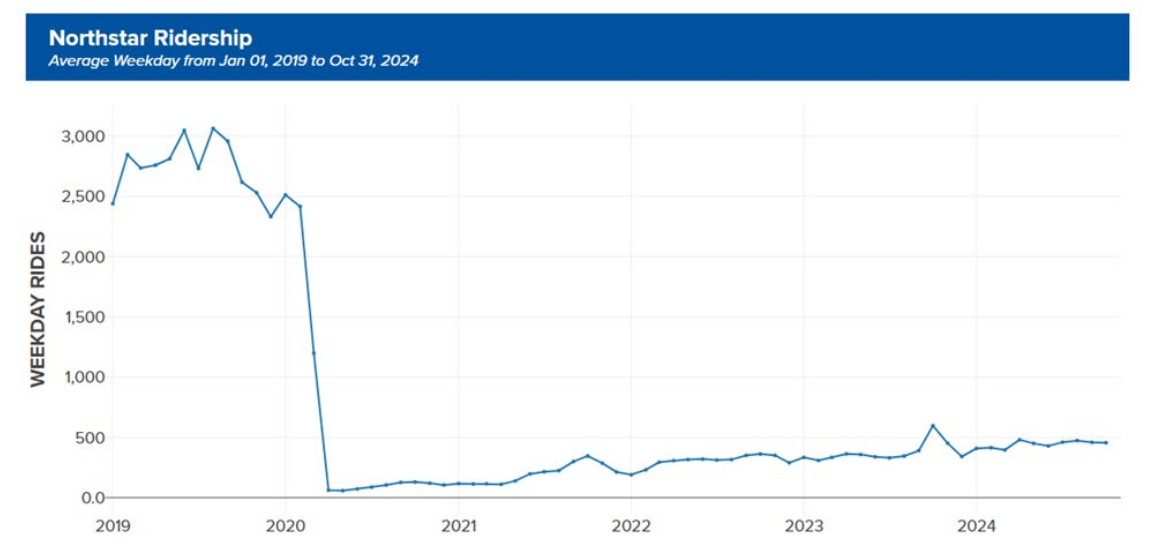
Average Weekday Northstar Ridership from 2019 to 2024 (Met Council)

Post lockdown, the line was the least used rail line in the country, with 430 riders per day, and a subsidy of $116 per rider.

The “easy” way to expand transit is to use existing Rights-of-Way (ROW). Because land acquisition is one of the most expensive and politically bruising parts of any project, running trains on existing freight tracks feels like a pragmatic win. But there is a massive catch.


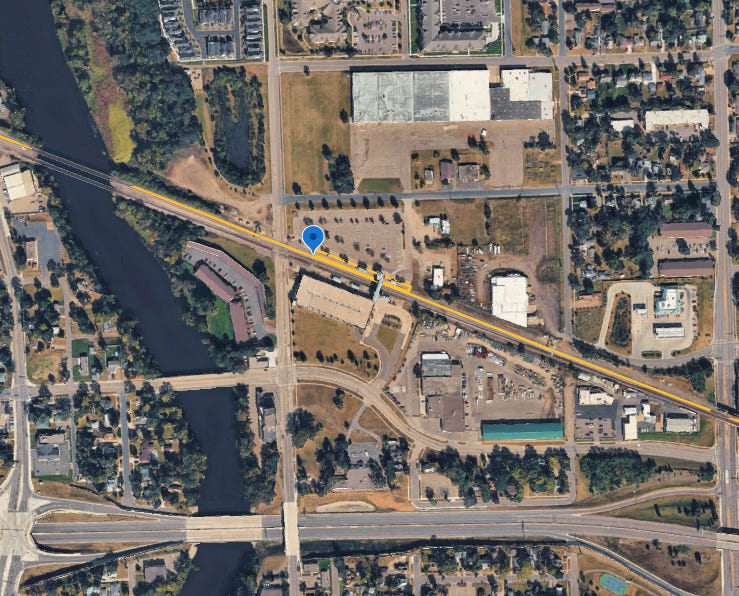
Anoka Station's surrounding land use, or lack thereof

Outside of historic interurban or regional rail corridors, most intercity and freight rail operators built their lines to avoid dense or productive land. Their priority was throughput and flat grades, not neighborhood access. Approaching a city center was a technical necessity for them, not a service goal.

If you run passenger service on those same approaches without aggressively reforming the surrounding land use, you are dead on arrival. The Northstar didn’t just fail to reform land use; its station placement was so poor it bordered on strategic sandbagging.

Try this mental exercise: Look at a population density map of the Minneapolis metro area. If you draw lines connecting the densest corridors, you are prioritizing people. If you simply draw a line over an existing rail ROW, you are prioritizing convenience for the state.
Policy makers often treat station placement as a game of “close enough.” They assume that as long as a station is within a municipality’s borders, it is automatically useful and will capture that demand. But that is like moving Grand Central Terminal to Staten Island and expecting it to be as productive as it is on 42nd Street. (Türkiyece karşılığı: Tuzla M4 uzatması istasyonunu İçmeler’den (Kaymakamlığın orası, tersanelere yakın, merkeze yakın dakika başı dolmuş-otobüs geçiyor.) kaldırıp onun yerine gidip de Akfırat’a (Tuzla’nın en kuzey tarafı, nüfusu 2.000~, yakınında bir tek Tepeören, Pendik’in köyleri, Kurtköy var.) koymak ve İçmeler kadar faydalı olacağını düşünmek.)

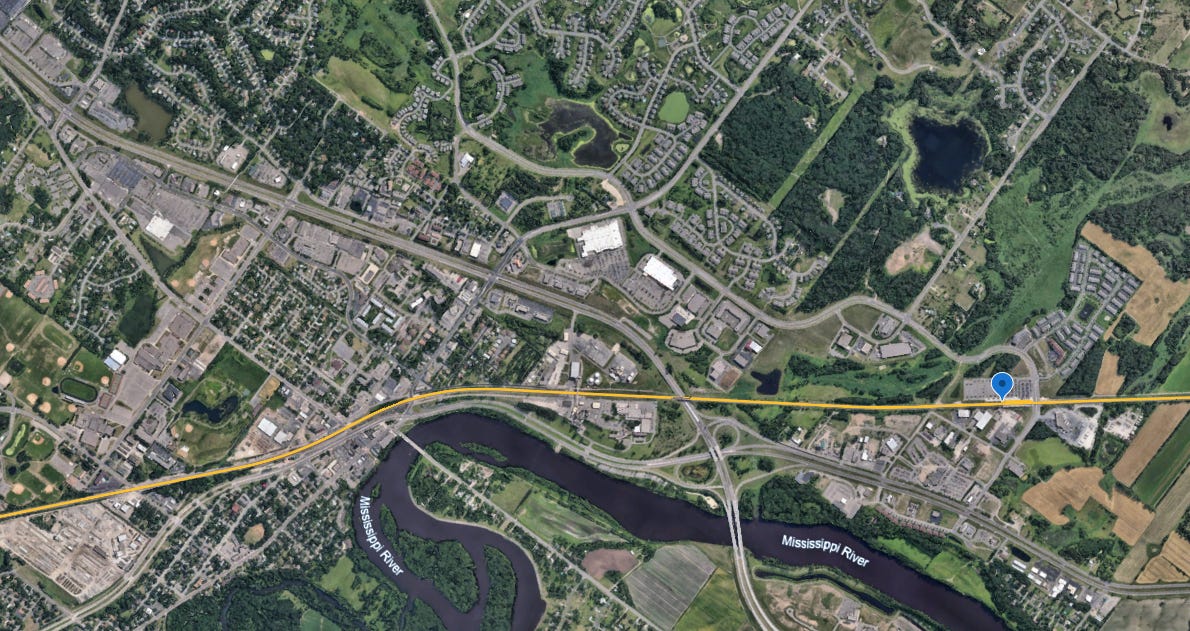
Take the city of Elk River. The Northstar station served the extreme periphery of the town, nowhere near where the actual density of people live. If a commuter is forced to drive to a station just to get on a train, the “transit math” falls apart. Why pay the time penalty of a transfer when you can just stay in your car and drive the entire way? In a city like Minneapolis, the “driving penalty” (traffic and parking costs) isn’t nearly high enough to justify the friction of a poorly located station.


Blue pin showing where Northstar station is in relation to the City of Elk River
The Northstar was never meant to be a shuttle to a small town. It was initially envisioned as a robust regional rail line connecting the Twin Cities to St. Cloud, a major tertiary city. The hope was that this would be the first spoke in a comprehensive hub-and-spoke system radiating out from Minneapolis.

But then came the budget cuts.

When the money dried up, the project was truncated to end at Big Lake, and just like that, its utility was effectively cut in half. Back in 1999, the late U.S. Rep. Jim Oberstar, a titan of the House Transportation Committee, told the St. Cloud Times exactly what would happen. He warned that the line had to reach St. Cloud, stating bluntly: “It is pointless to have a partial project.”

Fast forward nearly 30 years, and he was proven right. The project was pointless.

This failure highlights a chronic issue in American transit planning. When faced with financial constraints, policymakers stop asking "What is the goal?" and start asking "What can we afford to build?"

This is the trap of Tool vs. Goal thinking.

  • The Tool: “We have these rail tracks, what can we put on them?”
  • The Goal: “How do we connect the people of St. Cloud and the Twin Cities with reliable, frequent transit?”
By focusing on the tool (the existing tracks) rather than the goal (connectivity), they built a line that went halfway to nowhere. To make matters worse, the rail line was flanked by bus routes that ran parallel to the tracks, served more actual population centers, and ran much more frequently.


When a bus is more convenient, more frequent, and drops you off closer to your destination than a multi-million dollar train, you haven’t built a transit system, you’ve built a case study to inefficiency.


The Service Was Designed for Failure

Imagine if I gave you access to your car keys for exactly one minute, four times a day. Outside of those tiny windows, your car is essentially a lawn ornament. You would quickly find the utility of that vehicle to be zero compared to the freedom of being able to grab your keys whenever you need them.


This was the fundamental flaw of the Northstar. It wasn’t built for people with lives; it was built for people with 9-to-5 desk jobs in one specific neighborhood.

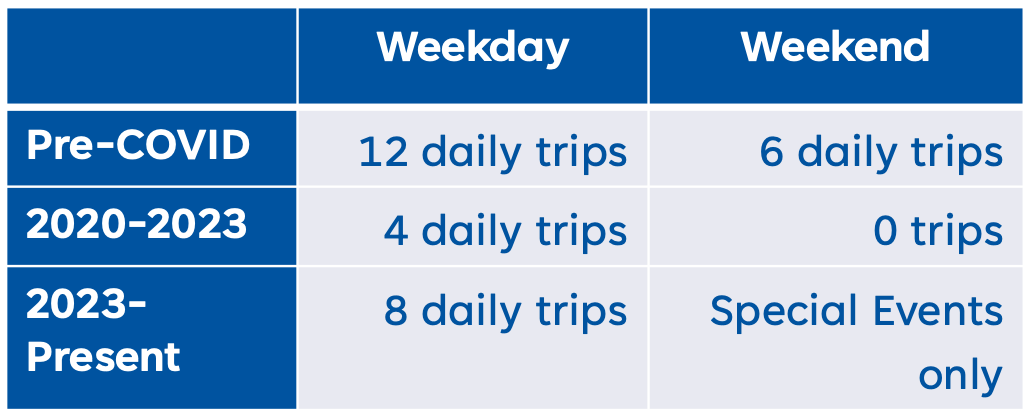
Pre-pandemic, the line saw only 5 or 6 trains daily, strictly serving peak hours, with a measly three trips on the weekend. During the pandemic, that “service” evaporated, dropping to just two trains. Weekend service was slashed entirely, unless there happened to be a Vikings game.

If you choose to take the train, how is a service with such a narrow, inflexible window helpful to you? What happens if you need to stay late at work? What if your kid gets sick at school?

Transit utility is further destroyed when frequency can drop by 200% overnight based on the political whims of the state house. If a system isn’t reliable, people won’t use it. Full stop.

Trains in this context must have clockface schedules. Whether it’s every 15 minutes, 30 minutes, or even once an hour, it needs to be consistent.People need to be able to plan their lives around a service, not pray that the schedule matches their needs. When you make transit a gamble, you’ve already lost the rider. (Alibeyköy bundan ötürü bu kadar nefret kazandı.)
When you look at the geography and the schedule, you realize the Northstar wasn’t built for “the public.” It was built for a very specific, very small niche of people. To be a “successful” Northstar rider, you had to fit into a tiny box:

  • You had to work in Downtown Minneapolis (or be one of the people heading to the eight Vikings home games a year).
  • You had to have access to a car to drive to a station, often located on the outskirts of town, but somehow prefer the friction of parking and transferring over just finishing the drive.
  • You had to have a rigid 9-to-5 schedule that perfectly aligned with those few morning and evening train sets.
The numbers tell the story better than any politician could. Per Census data, there were only 4,884 people total who lived in those Northstar towns and worked in Minneapolis.

Think about that. We built an entire heavy rail infrastructure project for a total addressable market of fewer than 5,000 people. Even if you captured 100% of that market, which is impossible for any transit mode, you still wouldn’t have enough ridership to justify the operations. By narrowing the scope to “peak-hour commuters only,” planners effectively guaranteed that the trains would be hauling “moving air” for most of their existence.


The death of the Northstar shouldn’t be used as an argument against rail. Instead, it should be used as a mandatory case study for every DOT and transit agency in the country on how not to spend a dime of public money.

If we want to build a “Swiss-style” system in America, we have to stop making these three fundamental mistakes:

We have to stop “let perfect be the enemy of the good,” but we also have to stop letting “cheap be the substitute for functional.” Truncating the Northstar at Big Lake saved money on paper, but it destroyed the utility of the line. If a project requires a certain length to reach its primary market (St. Cloud), and you can’t afford to get there, don’t build it. Redirect that money into high-frequency bus rapid transit (BRT) that actually reaches the people while also densifying. Half-building a train is just a very expensive way to fail. (The DC Streetcar is a perfect example of this!)

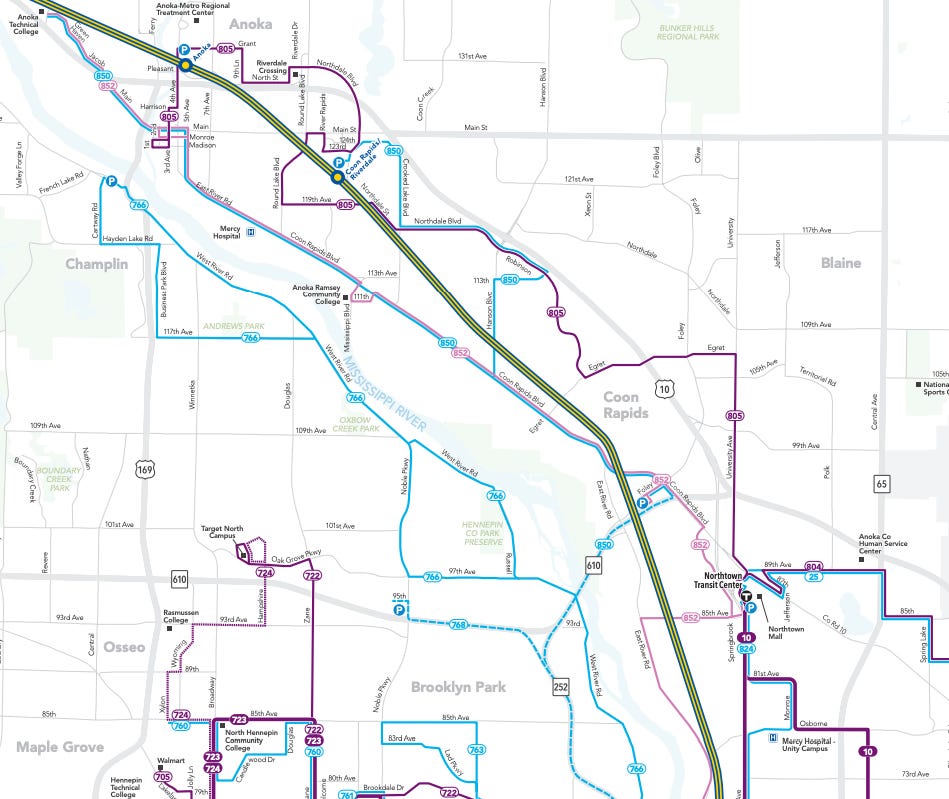
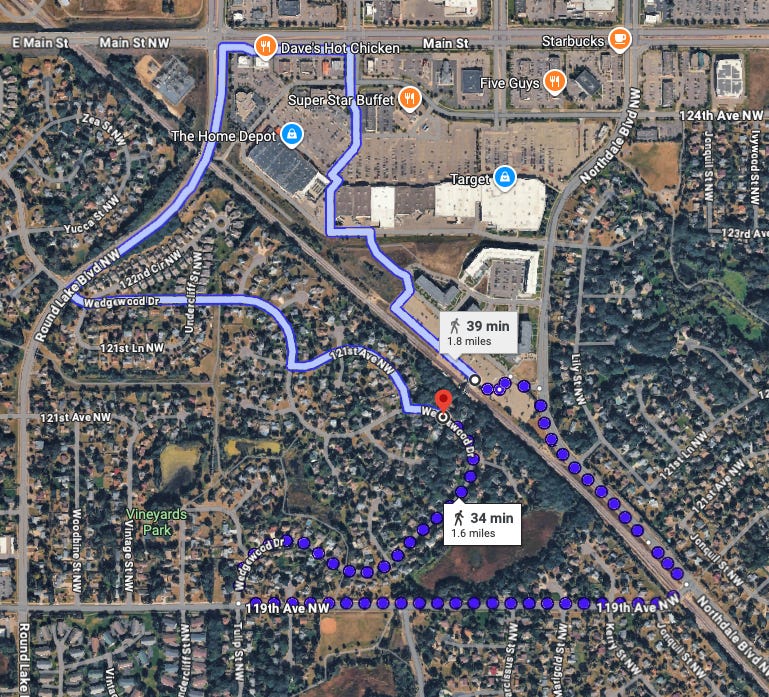
You cannot “engineer” your way out of bad land use. A train station in a field, separated from a town by a four-lane highway, is not a transit asset, it’s a parking lot with tracks. If we aren’t willing to zone for high-density, walkable housing within a quarter-mile of the platform, we shouldn’t be surprised when the trains are empty. You’ll notice that with Coon Rapids’s train station, the abutting home to the platform was a 34-minute walk. Crazy.


The 34-minute walk from the Coon Rapids train station to the nearest home.
The “Commuter Rail” model is dead. The post-pandemic world doesn’t move on a 9-to-5, Monday–Friday rhythm anymore. If a train doesn’t come often enough that a rider can throw away their schedule, it isn’t a viable alternative to a car. We need “regional rail”: all-day, bi-directional, clockface service. If you can’t provide that, you aren’t building a service; you’re building a niche hobby for a handful of suburbanites.

The Northstar wasn’t our North Star. It was a relic of a “tool-first” mentality that prioritized ease of construction over ease of use. If we want people to get out of their cars, we have to stop giving them excuses to stay in them.

(Sondaki cliffhanger’ı bahsi geçen yazı paralı olduğu için kaldırdım)

Kaynak: The Transit Guy (Substack)
 
Geri
Üst